
Industries
Veterinary clinic cleaning in Santa Cruz
Santa Cruz vet practices and animal hospitals, from the lobby and exam rooms to the kennel ward and the staff room, cleaned after closing to the steps your clinic sets.
Printable checklist
Animal care in a town full of dogs
Dogs are part of daily life in Santa Cruz, from the beach paths to the café patios downtown. The practices that look after them come in many sizes: single-doctor clinics in converted bungalows, full-service hospitals where surgery and overnight stays happen along the busier commercial roads, and cat-only and exotic-pet practices in small storefronts.
What they share is a long, messy day. Muddy paws from the beach trails, fur in every corner and the occasional accident on the lobby tile all land on a staff whose real job is caring for animals. An evening crew takes the building back to clean so the morning team can start on patients instead of mops.
The waiting room and front counter
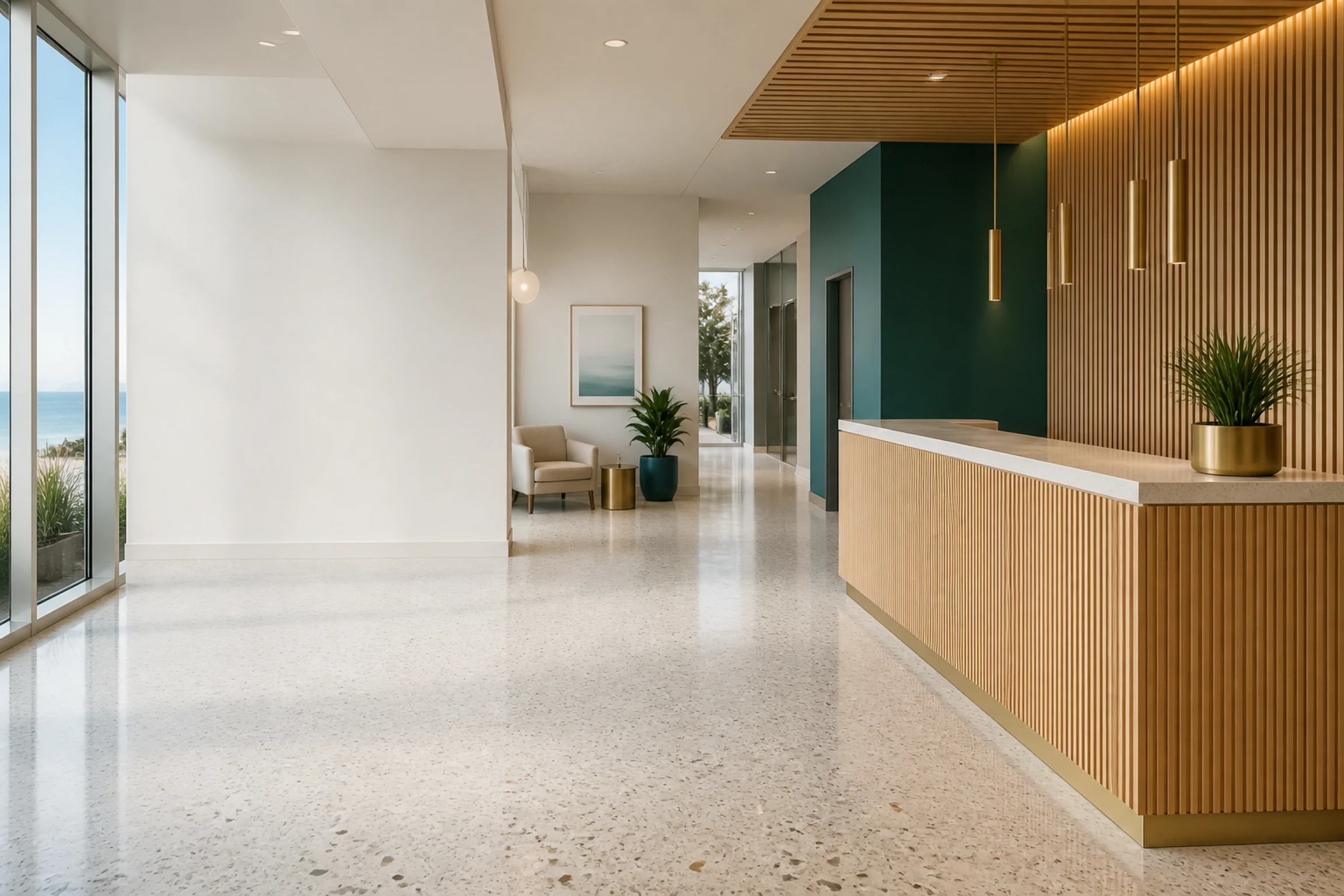
Pet owners notice smell first and floors second. Crews wipe down the reception desk, the payment terminal and the treat jar, clean the lobby benches and the scale platform, and wash nose prints off the entry glass and the low panels of the doors.
Hard floors are swept to pull up fur and sand before they are mopped, which keeps hair from turning into a gray film at the baseboards. Retail shelving with food and leashes is dusted, and the pet relief corner by the door gets its own wipe and mop.
Exam rooms set up for tomorrow’s appointments
Your practice manager sets the sequence for each exam room. Hair and soil come off tables, counters, chairs, sink basins, scales, door levers and cabinet fronts before the clinic’s EPA-registered disinfectant is applied and left wet for as long as its label requires.
Treatment and surgery rooms that need everything done, ceiling to floor, can be booked for terminal cleaning. Crews are trained in bloodborne-pathogen precautions, and when a cleaner passes a whiteboard or a screen with case notes on it, they leave it alone and never discuss what they saw.
Kennels, wards and the treatment floor
Boarding runs, recovery wards and the open treatment area see the heaviest wear. With the animals settled where your team wants them, crews clean the floor of empty runs, wipe kennel doors and the walls around them, and mop the walkways between banks of cages. Drains in the run floors are cleared of hair.
Prep rooms, supply rooms and the back hallway get a regular sweep and mop. Your staff keep handling the animals, bedding and food bowls; crews work around them, and the kennel layout stays exactly as your techs left it.
Floors that take claws and constant mopping
Vinyl tile and sealed concrete in a vet building are mopped every single day, and claw marks dull the shine quickly. A machine scrub every so often removes the haze that builds up under nightly mopping, and vinyl can be stripped and refinished over a long weekend. See our floor care page for how that work is scheduled.
Rubber mats from exam tables and kennel runs can be scrubbed during the same visit, and lobby carpet tiles, if your clinic has them, can get hot water extraction.
Break rooms, offices and restrooms
Doctors and techs eat lunch in shifts and live out of the break room. Crews clean the counters and sink, wipe out the microwave and polish the fridge handle, along with the staff restroom and the client restroom off the lobby. Paper towels, soap and toilet tissue can be stocked from your supply closet or supplied by us.
The office where the practice manager handles schedules and billing is cleaned around the desk, with papers left exactly as they are.
Picking a schedule for the clinic
Most practices take a visit each evening after the last appointment. Twenty-four-hour or emergency practices can name a quiet window instead, and booking a day porter for a crowded Saturday puts someone on the lobby and restrooms between appointments. Every cleaner is background-checked, supervisors do quality inspections, and your clinic gets a certificate of insurance showing our workers’ compensation and liability coverage.
To start, use the contact page to tell us your hours, room count and anything special about the wards. We then tour the clinic at no charge alongside your practice manager and send back a written quote that prices each part of the building.
A few useful answers
Common questions.
Our clinic has a disinfectant it trusts. Will the crew use that one?
Yes, provided it carries EPA registration, or crews can bring a registered product of their own. Either way, it goes on after the surface is cleaned and stays wet for the time its label lists.
Do your cleaners handle the animals?
No. Your staff move and care for the animals. Crews clean around kennels and runs once your team has the animals settled.
Could the boarding wards get a weekend visit while the clinic is closed?
Yes. A weekend visit can be scheduled for the wards. Once your kennel staff have the boarded animals settled, crews clean the empty runs, wipe kennel doors and mop the walkways, and the lobby and restrooms are ready for Monday.
How do you deal with all the pet hair?
Fur is swept or vacuumed up first and the mop comes after, corners and baseboards get extra attention, and kennel drains are cleared, so fur is removed rather than pushed around.
Our hospital is open around the clock. When would you clean?
In the quietest window your team picks, often late at night or early morning, working one area at a time so the treatment floor stays usable.
Services