
Industries
Dental office cleaning in Santa Cruz
Operatories, sterilization areas, the front office and the reception room in Santa Cruz dental practices, cleaned each evening so the first patient sits down in a spotless chair.
Printable checklist
Dental practices around Santa Cruz
Dentists, orthodontists, oral surgeons and pediatric dental offices are spread across Santa Cruz: in low professional buildings on the east side, in older houses turned into offices near downtown, and in shopping-center suites out toward Capitola and Soquel. A small practice might have three chairs; a group office can run a dozen operatories plus an imaging room and an in-house lab.
Every one of them runs a tight daily schedule. Your hygienists and assistants already handle chairside disinfection between patients. Our evening crew takes care of the rest of the building, so the team arrives to a clean office and can start seating patients on time.
Operatories, room by room
The operatory is where patients spend the visit looking around, and they notice dust on the light arm or a smudge on the cabinet doors. Crews follow the order your office manager or infection-control lead writes down for each room. Counters, cabinet fronts, the patient chair’s base and arms, the stools, the overhead light housing and the outside of the delivery unit are cleaned to lift any residue, and then an EPA-registered disinfectant goes on. The crew lets it sit wet for the full label dwell time.
Trays and equipment your assistants have set up for the morning stay exactly as arranged. Floors are cleaned last, working out from under the chair toward the door.
When an operatory or surgical room needs a complete turnover, terminal cleaning can be scheduled for that room: ceiling vents and lights first, then walls, fixtures and cabinetry, and the floor at the end.
Sterilization area and lab bench
The sterilization area has its own workflow, and the crew respects it. Countertops your assistants have cleared, the sink basins, the outside of cabinets and the floor are cleaned, and the sterilizer and wrapped packs are left precisely where your assistants keep them. The in-house lab gets the same treatment: open bench space and the floor are cleaned, and models, impressions and cases in progress stay where they sit.
Reception, consult rooms and restrooms
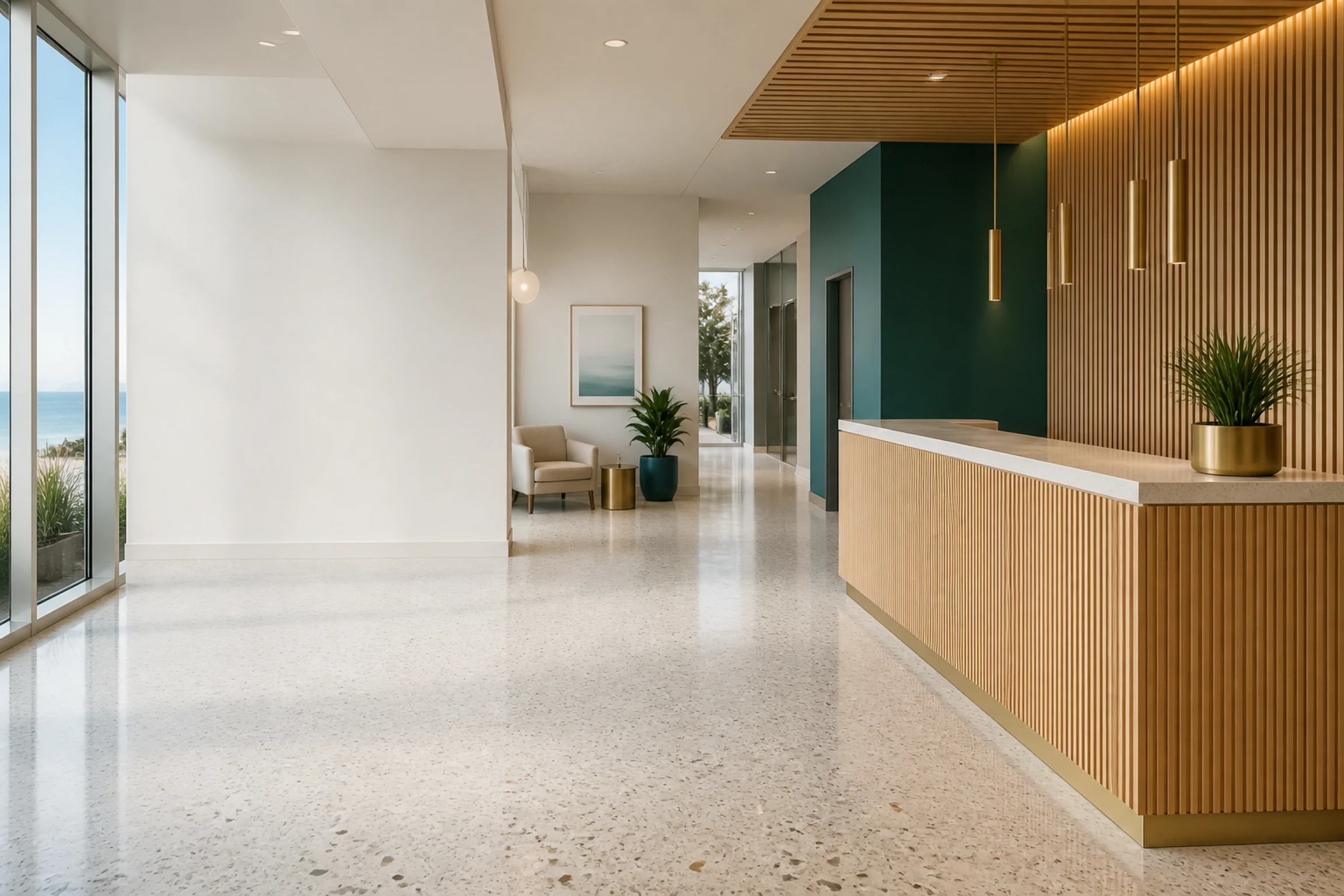
Nervous patients spend their wait looking around the room. Crews wipe the check-in window and the clipboard tray, clean the front door glass and the TV or aquarium surround, and vacuum beneath every row of seats; toys in the kids’ corner are wiped when your office sets them out. The entry mat is vacuumed and the hard floor just inside the door is mopped, since rainy-day shoes track straight in from the parking lot.
Consultation rooms and treatment-planning offices are cleaned around paperwork and screens. Patient restrooms are scrubbed fixture to floor, and soap, paper towels and toilet tissue are restocked, either from the boxes in your back room or with product we deliver.
Privacy and training for clinical spaces
Dental offices keep charts, X-ray images and billing records in plain sight during the day. Our cleaners work with HIPAA-aware habits: screens are dusted without being touched, papers are cleaned around rather than moved, and nothing seen in the office is ever repeated. Every cleaner is background-checked and has bloodborne-pathogen training before working in clinical rooms.
Supervisors run quality inspections using the checklist your crew works from. Our company holds a bond and liability insurance, workers’ compensation extends to each person on the crew, and the certificate of insurance lands in your office manager’s inbox ahead of night one.
Carpets, hard floors and slow weeks
Waiting room carpet catches beach sand and winter mud. Booking commercial carpet cleaning a few times a year brings hot water extraction to the reception room, pulling out grit the nightly vacuum leaves, and vinyl in operatories and hallways can be stripped and refinished one room at a time. If your office closes for a week around the holidays, those quiet days give the floors time to cure before patients return.
Setting the schedule
An evening clean after the day’s final appointment suits a typical patient schedule; offices with late appointments can choose a pre-dawn slot instead, and a Saturday clinic day can be followed by a Sunday clean so Monday starts fresh. Busy group practices sometimes add a midday restroom and reception check on their longest days. Our medical office cleaning page covers clinics that share a building with your practice. To get started, send your chair count, hours and any rooms with special steps through the contact form. A free walkthrough with your office manager follows, then a written quote room by room.
A few useful answers
Common questions.
Our last patient leaves around seven. When would your crew arrive?
After your team has finished closing duties. The arrival time is set with your office manager, and the crew works through the operatories first so the clinical rooms are done before the front office.
Will cleaners touch patient charts or computer screens?
No. Papers are cleaned around and screens are dusted without being operated or read.
Can one operatory get a full terminal clean without changing the rest of our schedule?
Yes. A single operatory or surgical room can be booked for terminal cleaning on its own night, and the rest of the office stays on its normal visits.
Which disinfectant goes on operatory surfaces?
The EPA-registered product your practice already stocks, or one the crew brings. Whichever it is, the surface is left wet until the time printed on the label runs out.