
Industries
Senior living community cleaning in Santa Cruz
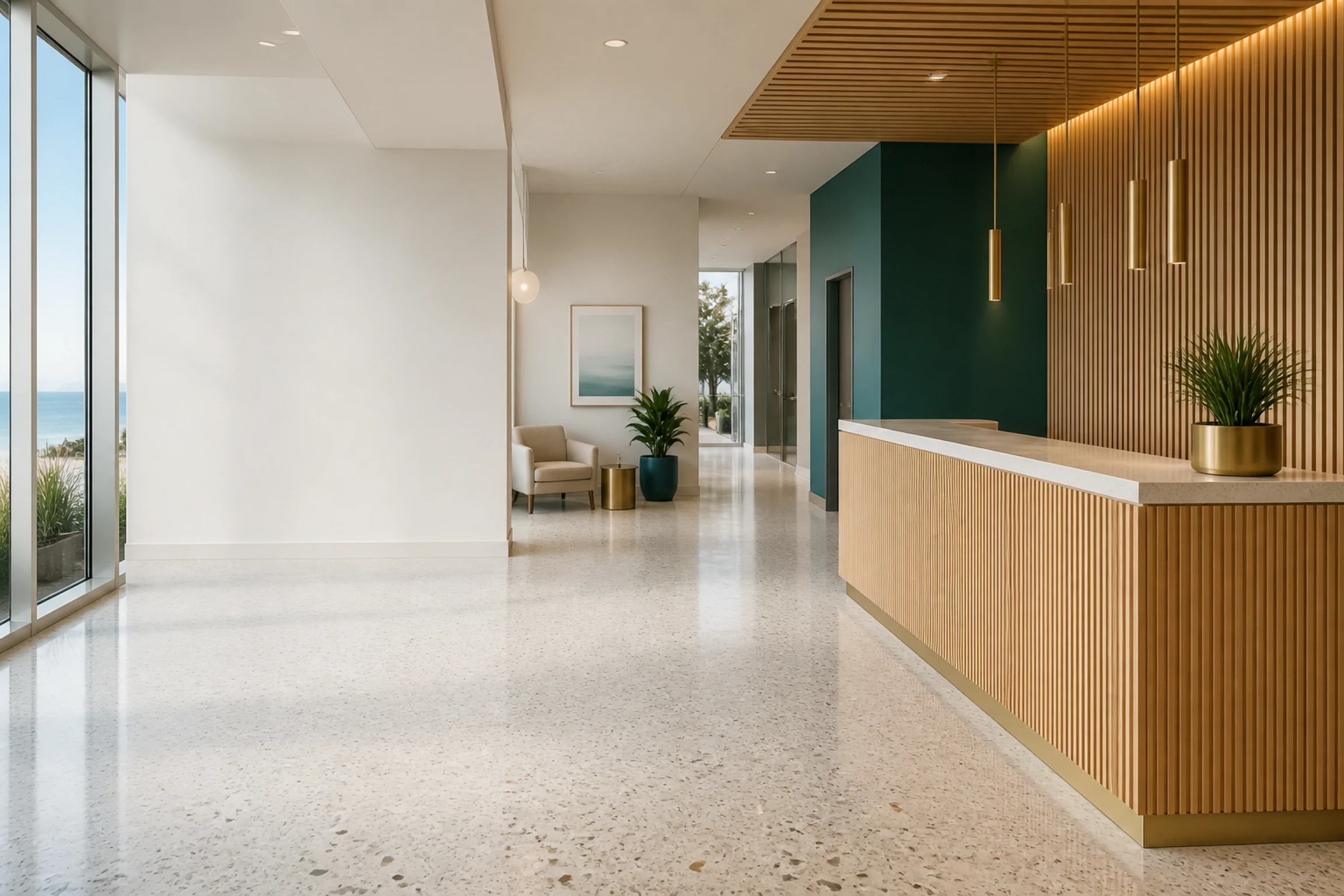
Shared spaces in Santa Cruz senior living communities kept bright and tidy: front lobbies, long hallways, dining rooms, activity rooms, restrooms and staff offices.
Printable checklist
Retirement living on the Monterey Bay
Senior housing around Santa Cruz ranges from independent living apartment buildings and assisted living residences to small board-and-care homes on quiet streets. They sit close to downtown, out toward the eastside neighborhoods and in nearby Soquel, Capitola and Aptos.
Each of these communities has a public face: the entrance a family walks through on a tour, the dining room where residents meet three times a day, and the hallways people use to get everywhere else. Those are the rooms this service covers, along with the offices and break rooms where the staff work.
The front entrance and long hallways
Families form an opinion of a community within a minute of walking in. Entry glass, the door push plates and the narrow sidelights beside them are polished, the reception counter and guest sign-in book area are wiped, and lobby armchairs and side tables are dusted. Smudges at walker and wheelchair height are wiped just as carefully as those at eye level.
Corridors get steady attention too. Handrails run the full length of most halls, and they are wiped from end to end, along with door levers, elevator panels and the benches that line the walls. Runners and carpeted stretches get a thorough vacuum, while tile and vinyl sections are damp-mopped one stretch at a time, with a dry lane left open and wet-floor signs in place so residents can keep moving at their own pace.
Dining rooms between meals
Meals give the day its rhythm, and the dining room needs to be ready for each one. Once breakfast or lunch wraps up, crews wipe tabletops and chair arms, brush crumbs off seat cushions, sweep and mop beneath the tables and clean the serving counter and the coffee and juice station. A fuller round once dinner is over sets the room for the next morning’s first seating.
A smaller dining room reserved for a family celebration or a resident’s birthday can be put back in order as soon as the guests leave. The adjoining servery and kitchen can be added through our kitchen and breakroom cleaning, with counters and food-prep surfaces sanitized as part of the visit.
Activity rooms, lounges and the library
Card tables, craft supplies, puzzles left half-finished and the piano in the corner all make an activity room feel lived in. Crews work around projects in progress, wiping tables and chairs, dusting shelves and the piano lid, and vacuuming under the furniture without disturbing anything set out for the next session.
Libraries, TV lounges, the exercise room and the chapel or meditation room each follow their own cadence for dusting and vacuuming. Common restrooms across the building are scrubbed from fixtures to floor, and paper towels, toilet tissue and soap are topped up while the crew is in the room. Bookshelves, remote controls and the arms of lounge recliners are wiped, since those are the things residents handle most in a shared sitting room.
Offices and staff rooms behind the scenes
Administrators, activity directors and the people who give tours all work from offices that deserve the same care as the lobby. Desks are wiped around paperwork without anything being shuffled or read, trash is emptied and floors are vacuumed.
In the staff break room, crews clean the counters and sink, wipe out the microwave and the fridge door, and tidy the time clock corner and the locker area. Nurses’ aides, cooks and housekeepers who spend long shifts on their feet notice when their own space is looked after, and a clean break room is part of what makes a community a good place to work.
Floor care and seasonal deep work
Long carpeted corridors show traffic patterns quickly, especially along the path from the elevator to the dining room. Periodic hot water extraction, described on our commercial carpet cleaning page, brings back the color between daily vacuuming. Strip-and-refinish work on the vinyl tile in activity rooms and service hallways is planned one wing or room at a time so a usable path is always open.
Coastal fog and winter rain track moisture and grit into entries, and a summer of visitors brings sand. A seasonal round of floor care at the main entrance, plus closer attention to the entry mats during the wet months, keeps that grime from spreading inward.
Respectful crews and a plan the director can see
Background checks clear every cleaner before they start work in a senior community. Crews speak politely with residents who stop to chat, keep carts and cords tucked out of walking paths, and schedule louder tasks such as floor machines for the hours your team prefers.
Supervisors carry out quality inspections and walk through the results with the executive director or facilities manager. Santa Cruz Janitorial holds a bond and insurance, keeps its cleaners on workers’ compensation, and sends every client a certificate of insurance. Book a free walkthrough through our contact page, and a written quote listing every common area with its visit frequency comes back to you afterward.
A few useful answers
Common questions.
Can hallways be cleaned while residents are walking through them?
Yes. The floor is mopped in short stretches with a dry lane kept open and wet-floor signs posted, so nobody has to wait to get by.
Which parts of the community are included?
Lobbies, hallways, dining rooms, activity rooms, lounges, common restrooms, plus the staff’s own offices and break room. Each one is listed in the written plan with its own visit frequency.
Could a crew tidy the dining room in the quiet hours after lunch?
Yes. A short midday visit takes care of tables, chairs and floors once lunch service ends, and the larger clean comes after the evening meal.
How will our director know the work meets expectations?
A supervisor walks the common areas at set intervals, then reviews the findings with the director, including anything that needs a follow-up.