
Industries
Santa Cruz apartment and HOA common area cleaning
Entry lobbies, corridors, laundry rooms, clubhouses and pool restrooms in Santa Cruz apartment buildings and HOA communities, cleaned on a calendar your manager or board controls.
Printable checklist
Shared housing between the beach and the hills
Housing in and around Santa Cruz comes in every shape: older courtyard apartment buildings near downtown and the Westside, larger complexes along the main corridors, rentals that fill with students each fall, and condo and townhome associations in Live Oak, Capitola, Soquel and Aptos. Many of them share one thing, a set of rooms that belong to everybody and that no single resident takes charge of.
These shared rooms shape what a prospective renter or buyer thinks on the first tour, and what current residents say when the lease or the dues come up for renewal. A clear plan for them, written down room by room, keeps the property looking cared for between board meetings and inspections.
Entries, mailrooms and hallways
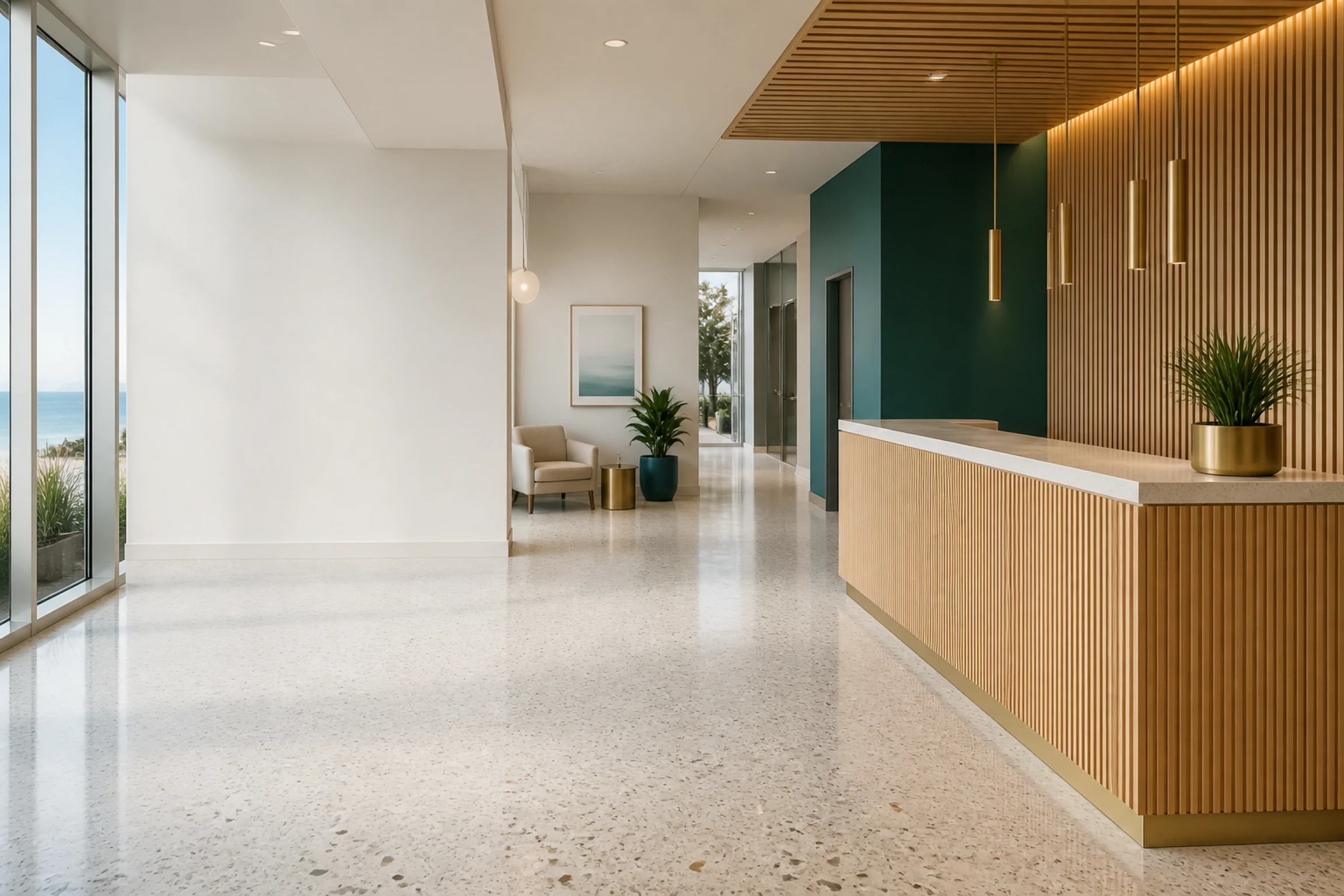
The front door is where residents judge the whole building. Crews clean the entry glass and the intercom panel, wipe the mailbox fronts and the package shelves, and pick up the flyers and boxes that collect around them. Lobby furniture is dusted, and the walk-off mats get a vacuum and a good shake, which matters in a town where sand travels in from the beach on every pair of sandals.
Corridors and stairwells are vacuumed or mopped from end to end. Handrails, light switches, elevator buttons and the inside of the elevator cab are wiped, and smudges on door frames and wall corners are spot-cleaned. Exterior stair landings in open-air buildings are swept clear of leaves and needles.
Laundry rooms, trash rooms and bike storage
Laundry rooms get plenty of traffic and very little attention from anyone else. The fronts and tops of washers and dryers are wiped, lint is cleared from the floor and from behind the folding table, the utility sink gets a scrub, and a damp mop finishes the floor.
In the trash and recycling rooms, crews sweep, mop and clean up the drips around chutes and bins, so the room smells fresher on the way out than it did on the way in. In bike rooms and storage cages, a sweep of the floor keeps the sand and grit from spreading down the hallway.
Clubhouses, fitness rooms and the pool area
Amenities are part of what residents pay for, so they should look like it. Clubhouse kitchens and lounges are wiped down and the floors cleaned, fitness equipment and mats are wiped, and mirrors are polished. At the pool, the restrooms and changing areas are cleaned and stocked with paper and soap, and the deck furniture and gate handles are wiped.
Summer brings longer pool hours and more guests, so a property can add visits for the season and cut back again in the fall. Reservable rooms can also be checked after each private booking, so the next resident who reserves the clubhouse finds it ready. After a community barbecue or a holiday party in the clubhouse, a one-time cleanup puts the room back in order the next morning.
Carpeted corridors and hard floors
Hallway carpet takes a beating from move-ins, wet shoes and bikes rolled to the stairs. Periodic hot water extraction pulls out the ground-in dirt that daily vacuuming misses, and our commercial carpet cleaning page describes how those visits work.
Vinyl tile in lobbies, laundry rooms and the clubhouse is a good candidate for a strip and refinish, ceramic tile gets a deep scrub of the grout lines, and marble or terrazzo at the entry can be brought back with cleaning and polishing. See floor care for the options, which can be scheduled for a weekday morning when the fewest residents are passing through.
Answering to a manager or an HOA board
Apartment communities usually work through an on-site or regional manager, while associations work through a board and often a management company. Either way, the written plan names each area, how frequently it gets attention and the tasks done on each visit, so the people paying for it can see exactly what they get.
Supervisors carry out quality inspections and send notes back, including small maintenance items crews spot, such as a burned-out hallway light or a sticking gate latch. We are bonded, our cleaners work under workers’ compensation coverage, and the association’s records hold our certificate of insurance. For larger communities, a day porter can walk the grounds during the day, checking the mail area, laundry room and pool restroom.
Keys, fobs and gate codes are handled however the manager prefers, and the leasing office or maintenance shop can join the same plan so one crew visit covers every shared space on the property.
Picking the visit days
Common area cleaning usually runs during the day, at hours the manager or board chooses, so vacuums and mop buckets stay out of the hallways late at night. A building can take two or three visits a week, or a daily walk-through of the entry and mail area with a deeper pass once a week.
Move-in season brings its own mess. When students arrive in late summer or leases turn over in June, hallways and elevators collect packing tape, cardboard and scuffs. A one-time cleanup after the busiest move-in weekend clears the boxes out of the recycling room and puts the corridors back in shape.
To get a schedule and a written quote, tell us about the property and the shared spaces it has. From there, we tour the common areas with whoever manages the property, at no cost.
A few useful answers
Common questions.
What time of day do your crews clean the hallways?
During daytime hours the manager or board picks, so residents are not woken by a vacuum outside their door.
Will the association receive proof of insurance for its records?
Yes. Our insurance certificate can be emailed directly to the management company or the board treasurer, whichever the association names.
Can we add summer visits for the pool and clubhouse?
Yes. Extra visits for the pool restrooms, deck and clubhouse can run through the summer and drop off once the pool closes for the year.
How do residents report a mess between visits?
They tell the manager or board as usual. The manager passes it on, and the spot is added to the next visit or handled with a one-time call.
Services